
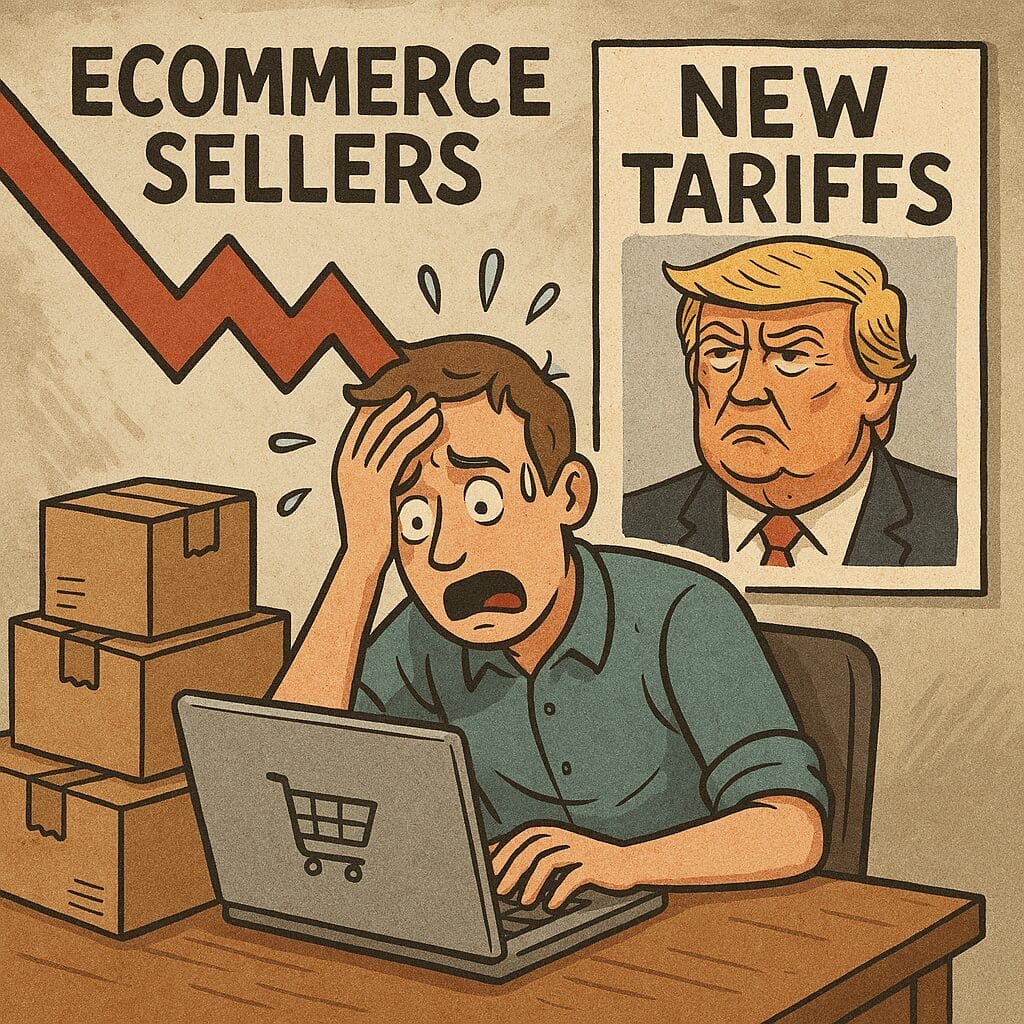
Understanding the Proposed Trump Tariffs: A CFO’s Perspective for Brands
April 2025
On April 2, 2025, former President Donald Trump announced a new tariff framework-widely referred to as the “Liberation Day Tariffs.” These proposals introduce a universal 10% tariff on all imported goods, with additional country-specific rates that could significantly impact the cost structure for U.S.-based e-commerce businesses.
While these tariffs are still in the proposal stage, they signal a substantial shift in U.S. trade policy. For companies importing goods from abroad, understanding and planning for these changes is critical.
The Tariff Proposal at a Glance
The proposed framework includes:
- A 10% baseline tariff on all imported products.
- Additional tariffs ranging from 20% to 49% on goods from selected countries.
- A 25% tariff on all foreign-made automobiles regardless of origin.
These measures are designed to address trade imbalances and promote domestic manufacturing, but they also mean higher costs for importers.
Detailed Chart of Proposed Tariffs by Country/Region
Below is a comprehensive table summarizing the proposed tariff rates and key details for various countries and product categories:
Country/Region
Proposed Tariff Rate
Notes
All Countries
10%
Baseline tariff for all imports
China
34%
Significant increase aimed at addressing manufacturing dominance
European Union
20%
Targets overall trade imbalances with EU member nations
United Kingdom
Baseline rate-no additional tariff beyond the universal 10%
Japan
24%
Reflects concerns over trade practices in auto and electronics sectors
South Korea
25%
Targets products including electronics and automotive parts
India
26%
In response to protectionist policies and trade imbalances
Taiwan
32%
Elevated tariff despite strategic alliances
Vietnam
46%
One of the highest proposed rates, reflecting concerns over redirected production from China
Cambodia
49%
Highest country-specific rate
Sri Lanka
44%
Targets textile and apparel trade imbalances
Thailand
36%
Applies to auto parts and other consumer goods
Bangladesh
37%
Likely to impact textiles and low-cost goods
Indonesia
Affects sectors such as electronics, rubber, and footwear
Switzerland
31%
Focuses on financial services and luxury goods
South Africa
30%
Addresses issues in metals and minerals
Pakistan
29%
Applies to textiles and certain manufactured goods
Foreign Automobiles
Applies globally regardless of the manufacturing origin
Source: Proposed policy details as of April 2025.
Implications for E-Commerce Importers
Even if your business isn’t directly sourcing from countries like China or Vietnam, the baseline 10% tariff affects all imports. The impact may include:
- Increased Landed Costs: A direct addition to the cost of goods sold (COGS), potentially squeezing margins.
- Cash Flow Challenges: Tariffs are typically paid at the point of entry, which can affect your working capital.
- Pricing Adjustments: You may need to reassess your pricing strategy to accommodate higher import costs.
- Supply Chain Considerations: Some suppliers may adjust production locations or change shipping practices to mitigate the impact.
What You Should Be Doing Now
1. Map Your Supply Chain
- Identify Countries of Origin: Verify where each product and component is manufactured.
- Review HS Codes: Ensure your product classifications are accurate, as these determine the applicable tariff rate.
- Engage with Partners: Work closely with your customs broker or freight forwarder to clarify your exposure.
2. Update Your Financial Models
- Recalculate Landed Costs: Factor in the new tariffs to understand their impact on each SKU.
- Forecast Cash Flow: Adjust your models to account for the timing and amount of duty payments.
- Review Profit Margins: Conduct sensitivity analyses to determine how various tariff scenarios affect your bottom line.
3. Explore Sourcing Alternatives
- Evaluate New Suppliers: Consider shifting some sourcing to countries with lower tariff rates.
- Consider Production Shifts: For high-impact products, explore options to modify the product or its assembly to qualify for a lower tariff classification.
- Plan Strategically: Understand that changes in sourcing can affect quality, lead times, and overall cost.
4. Monitor Policy Developments
- Stay Updated: Trade policy can evolve quickly. Regularly check updates from relevant authorities.
- Prepare for Variability: While the proposals are not finalized, it is prudent to assume that at least the baseline tariff will be implemented in the near term.
Final Thoughts
The proposed tariffs present a complex challenge that requires a careful, proactive approach. By understanding your exposure and recalibrating your cost structures now, you can mitigate some of the potential impacts on your business. We will continue to monitor these developments and provide timely updates as the situation develops.
Is this costing your business money?
Our eCommerce accounting team works with 7–9 figure brands every day — and the first consultation is free.